Unlocking the Potential of Rainbow 3d Seamless Pattern for Modern Design Projects
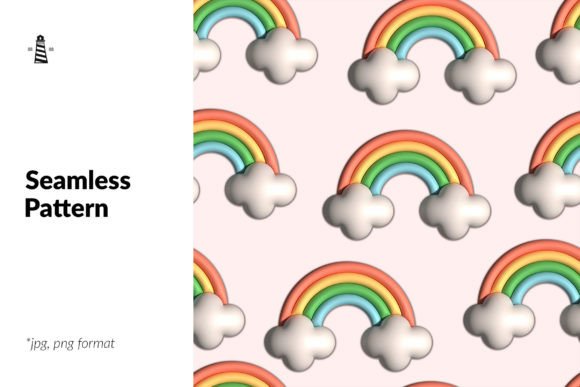
In the evolving landscape of digital and physical design, visual continuity is paramount. Designers are constantly seeking assets that not only capture attention but also integrate seamlessly into various mediums without losing integrity. Among the most versatile and visually striking assets available today is the Rainbow 3d Seamless Pattern. This specific type of graphic asset combines the playful, vibrant energy of a rainbow with the depth and realism of three-dimensional rendering, all wrapped in a repeating tile structure that allows for infinite scalability.
Understanding how to leverage this asset requires more than just knowing where to download it; it involves grasping the technical specifications, the aesthetic advantages, and the diverse applications across industries. Whether you are a branding expert looking to create memorable packaging or an educator designing engaging classroom materials, the nuances of high-quality seamless patterns can significantly elevate your final output.
The Anatomy of a High-Detailed 3D Seamless Pattern
To truly appreciate the value of a Rainbow 3d Seamless Pattern, one must first understand what constitutes its high-fidelity construction. Unlike flat vector illustrations that rely on simple color blocks, a 3D pattern utilizes lighting, shadows, gradients, and perspective to create objects that appear to pop off the surface. When these elements are arranged in a seamless loop, they create an illusion of continuous space, making them ideal for backgrounds and wraps.
The "high detailed" aspect mentioned in professional descriptions refers to the resolution and texture quality. In the context of digital files, this often means the inclusion of multiple file formats to suit different workflow needs. For instance, receiving both a JPG image and a PNG image provides flexibility. The JPG format offers efficient compression for web use and general viewing, while the PNG format preserves transparency (if applicable) or higher color fidelity for print editing. This dual-format delivery ensures that the designer has the right tool for every stage of the production process.
Technical Specifications: Size and Resolution
A critical component of any premium design asset is its resolution. Standard screen resolutions often suffice for basic web headers, but they fall short when scaling up for large format prints or detailed textures. The specification of a Size of image 12 x 12 inches and 300 dpi is a gold standard for professional work.
- 12 x 12 Inches: This square dimension is highly practical for scrapbooking, textile repeats, and creating square social media graphics. It provides a generous canvas for the pattern to breathe and repeat without obvious clipping.
- 300 DPI (Dots Per Inch): This is the industry-standard resolution for high-quality printing. At 300 DPI, the pixel density is sufficient to prevent jagged edges or blurriness when the pattern is printed on paper, fabric, or packaging materials. This ensures that the 3D details remain crisp and sharp, preserving the illusion of depth.
Visual Appeal and Psychological Impact
Why choose a rainbow motif? Colors have a profound psychological impact on human perception. Rainbows, in particular, are universally associated with positivity, diversity, hope, and creativity. By rendering these colors in a 3D style, the design gains a sense of tangibility and modernity. It moves away from the childish associations of simple clip-art rainbows and towards a sophisticated, tactile aesthetic.
The 3D effect adds volume and weight to the shapes. If the pattern features spheres, ribbons, or abstract geometric forms colored like a spectrum, the interplay of light and shadow creates a dynamic visual rhythm. This dynamism keeps the viewer’s eye moving across the design, which is particularly effective in web backgrounds and textiles where static images can sometimes feel dull. The seamless nature of the pattern ensures that this movement is uninterrupted, creating an immersive experience.
Diverse Applications Across Industries
The versatility of a Rainbow 3d Seamless Pattern makes it a valuable asset across a wide spectrum of creative fields. Its ability to adapt to different contexts is what makes it a staple for many professionals.
Stationery and Packaging
In the realm of stationery, aesthetics drive purchase decisions. A notebook, journal, or greeting card featuring a high-resolution 3D rainbow pattern stands out on crowded shelves. The tactile quality implied by the 3D rendering suggests a premium product inside. Similarly, for packaging and branding projects, consistency is key. Brands looking to convey innovation, joy, or inclusivity can use this pattern as a primary background element. The 300 DPI resolution ensures that when the pattern is scaled up to fit a box or a bag, the edges remain clean and the colors vibrant, reinforcing brand quality.
Textiles and Fashion
Fabric printing relies heavily on seamless patterns. Designers need assets that can tile perfectly without visible seams disrupting the flow of the design. A Seamless pattern with 3d rainbows offers a contemporary twist on classic color theory. It can be applied to apparel, home decor items like throw pillows or curtains, and even accessories. The high detail ensures that when printed on fabric, the texture of the material complements the digital depth of the pattern, rather than competing with it.
Art Prints and Digital Decor
For interior designers and artists, wall art is a significant market. Large-scale prints benefit immensely from high-resolution source files. The 12x12 inch size at 300 DPI allows for significant enlargement without loss of quality, making it suitable for large gallery prints. The 3D aspect adds a layer of sophistication that fits well in modern, minimalist, or eclectic interiors, providing a focal point that is colorful yet structured.
Web and UI Design
In the digital space, background textures add depth to user interfaces. A subtle Rainbow 3d Seamless Pattern can serve as a backdrop for websites, landing pages, or app interfaces. Because the pattern is seamless, it can be set to repeat via CSS, reducing the load time compared to loading a massive single image. The vibrant colors can enhance user engagement, particularly for brands targeting younger demographics or those in the creative, educational, or tech sectors.
Considerations for Implementation
While the asset itself is robust, successful implementation requires careful consideration of the surrounding design elements. The vibrancy of a 3D rainbow pattern means it has high visual weight. Therefore, it should be used strategically.
Balancing Contrast and Readability
When using this pattern for branding projects or text-heavy designs, ensure there is enough contrast between the pattern and any overlaid text. Using semi-transparent overlays or placing text on solid-colored sections derived from the pattern can help maintain readability. The goal is to let the pattern enhance the content, not overwhelm it.
Color Harmony
Even though the pattern contains a full spectrum of colors, it is important to consider how these colors interact with other elements in your project. If the rest of the design palette is neutral, the rainbow pattern will act as a powerful accent. If the surrounding elements are also colorful, care must be taken to avoid visual clutter. The 3D shading in the pattern helps to ground the colors, making them easier to integrate into complex compositions.
The Workflow Advantage
For professionals, efficiency is crucial. Receiving a complete package—1 JPG image and 1 PNG image—streamlines the workflow. Designers do not need to search for multiple versions or worry about compatibility issues. The provided dimensions and resolution mean that the asset is ready for immediate use in both Adobe Photoshop, Illustrator, and other design software without extensive resizing or rasterizing, which can degrade quality.
Furthermore, the seamless nature of the pattern reduces the need for manual tiling adjustments. Users can simply drag and drop the image into their design software’s pattern library or background settings. This ease of use is particularly beneficial for educators and hobbyists who may not have advanced design skills but still want to produce professional-looking results.
Conclusion
The Rainbow 3d Seamless Pattern represents more than just a decorative element; it is a functional design tool that bridges the gap between playful aesthetics and professional execution. With its high-detail rendering, optimal 12x12 inch size, and 300 DPI resolution, it meets the rigorous demands of modern print and digital media. From enhancing the appeal of stationery and packaging to adding depth to textiles and web backgrounds, this asset offers endless possibilities for creators across all levels. By understanding its technical strengths and application potential, designers can harness the power of 3D color to create compelling, cohesive, and visually stunning projects.